EN | FR
EN | FR
Search

Measuring Lung Function in Conscious Subjects: An Overview of WBP, HOP, and DCP

Conscious lung function measurements allow researchers to accurately quantify the effects of diseases or therapeutic interventions on the drive to breathe, often referred to as the “pumping apparatus”.

The breathing drive relies on a complex network of components that regulate respiration, including:

  • Respiratory muscles

  • The central nervous system

  • Chemo-receptors and mechano-receptors

Tracking respiratory outcomes, such as tidal volume, respiratory rate, minute volume, and inspiratory, expiratory, and apneic periods, is particularly useful in safety pharmacology studies, as well as in research dedicated to sleep and neuromuscular diseases.

Comparing Plethysmography Techniques: WBP vs. HOP and DCP

Whole Body Plethysmography (WBP) is the simplest and least invasive approach for conscious in vivo respiratory measurements. However, researchers must account for the inherent limitations of WBP [2], particularly regarding the strict accuracy of breathing volumes and the assessment of airway hyperresponsiveness.

When absolute accuracy is required, techniques like head-out plethysmography (HOP) or double chamber plethysmography (DCP) are highly recommended. These systems provide a more precise, validated assessment of lung function.

EF50: A Validated Indicator of Airway Response

 Lung Function in Conscious Subjects​Unlike WBP, where the subject moves freely within a chamber, HOP and DCP measurements are acquired from restrained subjects. This restraint allows researchers to capture true inspiratory and expiratory flow measurements and their corresponding parameters.

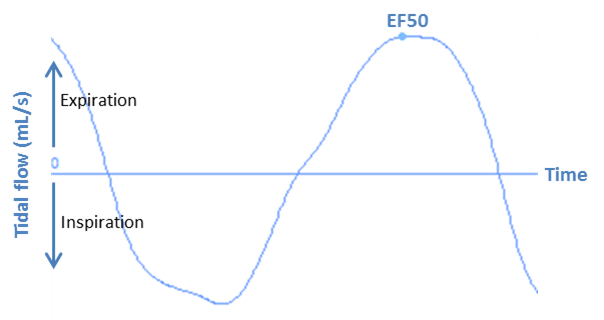
One of the most valuable outcomes derived from these techniques is the tidal mid-expiratory flow (EF50). Over the last 20 years, EF50 has been extensively described and validated as a highly reliable index of flow limitation and airway obstruction.

Calculated on a breath-by-breath basis during spontaneous tidal breathing, the EF50 parameter typically decreases in the presence of airflow obstruction, giving researchers a clear, real-time look at airway health.

Applications in Respiratory Safety Pharmacology

EF50 is frequently utilized in respiratory safety pharmacology studies performed under ICH S7A guidelines, where the HOP technique serves as the gold standard for conscious lung function assessment.

However, EF50 can also be obtained using Double Chamber Plethysmography (DCP). DCP offers unique experimental advantages, including:

  • The ability to expose subjects to nebulized substances.

  • The capacity to record nasal and thoracic flows separately.

Using the DCP approach, EF50 is an excellent metric to describe changes in airway responsiveness to broncho-active substances in conscious mice (both naïve and allergic models).

Next Steps: Comprehensive Lung Function Assessment

Because EF50 does not provide a direct, absolute measurement of pulmonary resistance, it is generally accepted in the field that any significant change in this parameter should be followed by a comprehensive, invasive lung function assessment. This is where advanced solutions, such as the flexiVent system, become essential to uncover the exact mechanics behind the observed respiratory changes.

References

Respiratory safety pharmacology – Current practice and future direction. (2013). Murphy DJ. Regulatory Toxicology and Pharmacology 69. DOI: 10.1016/j.yrtph.2013.11.010

Measuring lung function in mice: the phenotyping uncertainty principle. (2003). Bates et al. J. of Appl. Physiology 1297-306. DOI: 10.1152/japplphysiol.00706.2002

Lung function measurements in rodents in safety pharmacology. (2012). Hoymann HG. Frontiers in pharmacology 3: article 156. doi: 10.3389/fphar.2012.00156.

Tidal midexpiratory flow as a measure of airway hyperresponsiveness in allergic mice. (2001). Glaab T et al. Am J Physiol Lung Cell Mol Physiol 280: L565-573.

Characteristic modifications of the breathing pattern in mice to evaluate the effects of airborne chemicals on the respiratory tract. (1993). Vijayaraghavan R et al. Arch Toxicol 67: 478-490.

Assessment of murine lung mechanics outcome measures: alignment with those made in asthmatics.(2013). Walker JKL et al. Frontiers in pharmacology 3: article 491. doi: 10.3389/fphar.2012.00491.

Empowering researchers

Welcome to SCIREQ’s knowledge center. You can find everything from software registration to document downloads to complete list of SCIREQ publications in this section. Everything you need to get the most out of your SCIREQ system.